
Pristine Water’s Electrochlorination Solution for a 350 MW Power Plant in Sri Lanka
Coastal power plants rely extensively on seawater to support critical operations such as cooling, condenser systems, and process water intake. While seawater is a readily available resource, it also carries microorganisms, algae, and biological contaminants that can pose serious operational challenges if left untreated. These contaminants can lead to biofouling, clogging of pipelines and heat exchangers, reduced heat transfer efficiency, increased maintenance requirements, and unplanned shutdowns—directly impacting plant performance and reliability.
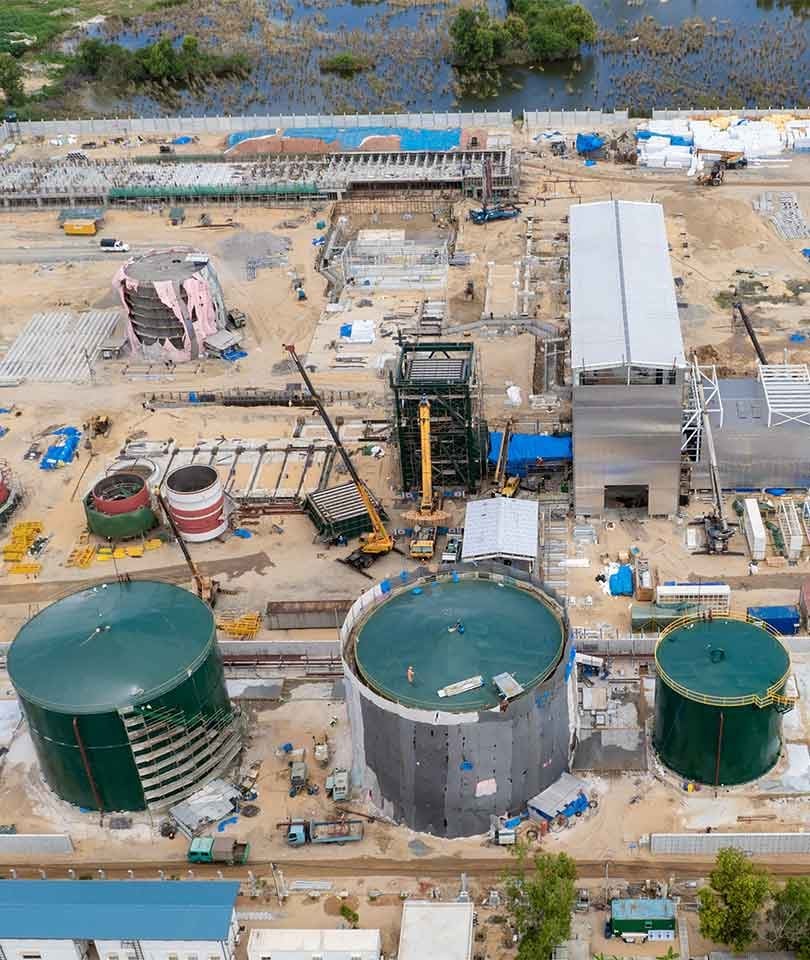
Image source: Lakdhanavi Limited – Sobadhanavi Power Plant (lakdhanavi.lk)
In large-capacity power plants, especially LNG-fired combined cycle facilities, maintaining consistent water quality is essential for ensuring stable operations and protecting high-value equipment. Effective chlorination at both the seawater intake and cooling water recirculation stages plays a vital role in controlling biological growth and preserving system integrity over the long term.
Lakdhanvi Ltd., operating the Sobadhanavi 350 MW (Sri Lanka's first power plant designed to use LNG as its primary fuel) LNG Fired Combined Cycle Power Plant, sought a proven and dependable chlorination solution that would mitigate biological risks while supporting long-term operational stability. The requirement was clear: a system that could ensure continuous disinfection, minimize operational risk, and align with the plant’s safety, efficiency, and sustainability objectives.
The Dual Challenge: Microbes and Recirculation Risks
Chlorination is a key requirement in power plant operations and plays a vital role at multiple stages of the water cycle. At the Sobadhanavi power plant in Sri Lanka, Lakdhanvi Ltd. identified two primary challenges:
1. Seawater Intake Disinfection
Raw seawater drawn from Sri Lanka’s coastal water contains high levels of microorganisms, algae, and biofouling agents that can obstruct intake systems, pipelines, and heat exchangers. Without effective treatment, these contaminants result in reduced efficiency, frequent maintenance interventions, and costly downtime.
2. Cooling Water Recirculation
In cooling water systems, spent steam condenses and recirculates continuously. This environment promotes microbial growth and scaling, requiring consistent chlorination to maintain water quality, prevent corrosion, and protect critical equipment.
Conventional chemical dosing methods were found to be less reliable, involving risks related to chemical storage, inconsistent dosing, and operational safety. Lakdhanvi Ltd. required a safer, on-site solution capable of generating chlorine precisely where and when it was needed.
Pristine Water’s Tailored Electrochlorination Solution
Pristine Water deployed a Continuous Type Seawater-Based Electrochlorination System (PCP 2 × 6 KPH) — a brine-free, on-site solution that uses seawater directly as the feed. The system generates sodium hypochlorite (NaOCl) through electrolysis, delivering a safe, efficient, and environmentally responsible chlorination solution ideally suited for coastal power plants.
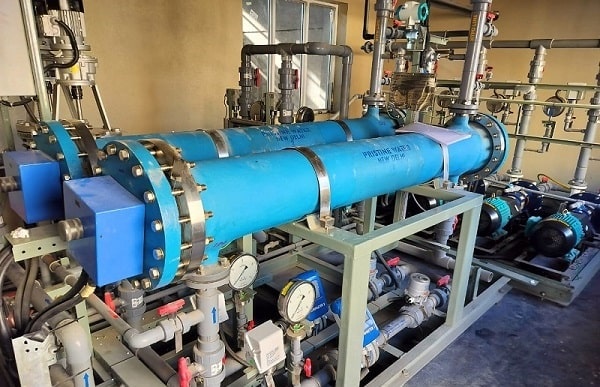
Key Features of the System
-
Continuous electrochlorination using seawater as feed
-
Adequate chlorine generation capacity for large-scale operations
-
Reliable performance in high-salinity and marine environments
-
Seamless integration with existing power plant infrastructure
Addressing Site-Specific Operational Considerations
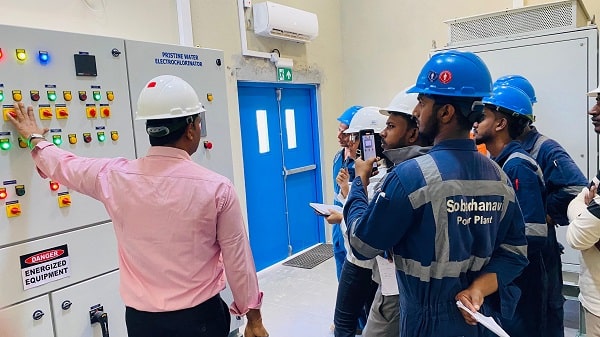
The system was engineered to align closely with the plant’s real-world operating conditions at the Sobadhanavi power plant in Sri Lanka:
-
Designed to perform reliably despite natural variations in seawater quality at the intake
-
Compact, skid-mounted configuration enabling seamless installation within limited footprints
-
Dual-unit (PCP 2 × 6 KPH) setup providing redundancy and operational flexibility
-
Continuous operation ensuring stable, controlled chlorination without manual intervention
This approach ensured operational continuity while reducing dependency on manual handling and chemical logistics.
Strategic Deployment Across Critical Locations
To ensure comprehensive biological control, the system was integrated at key points within the plant’s water handling process:
-
Seawater Intake: Chlorine dosing at the intake point neutralizes microorganisms at the source, preventing biofouling and protecting downstream pipelines and heat exchangers.
-
Cooling Water Pump House: Continuous pre-treatment at the CW pump house ensures effective control of biological growth in recirculating cooling water systems.
The system’s continuous operation mode guarantees stable free residual chlorine (FRC) levels, compliant with environmental norms and power plant standards.
Overcoming Site-Level Execution Challenges
Implementing electrochlorination at a 350 MW LNG-fired power plant required careful planning and execution:
- Variable seawater conditions: System design and controls ensured consistent chlorine generation despite fluctuations in salinity and temperature
- Space constraints: Compact skid-bmounted units enabled installation without major civil or piping modifications
- Operational reliability: Dual-unit configuration ensured uninterrupted chlorination during maintenance or peak demand
- Environmental compliance: Controlled dosing and monitoring supported adherence to regulatory discharge limits
Results and Benefits
With Pristine Water’s electrochlorination solution in place, Sobadhanvi achieved:
- Reliable and continuous disinfection of seawater intake
- Effective control of biofouling in cooling water systems
- Reduced risk of pipeline blockages and equipment fouling
- Improved operational safety by eliminating hazardous chemical handling
- Enhanced reliability and efficiency of the 350 MW power plant
Pristine Water’s electrochlorination systems are transforming power plants across India, from LNG to coal-fired facilities. By leveraging seawater as a resource, we deliver disinfection without waste — perfect for the circular economy in water management.
Ready to safeguard your power plant’s cooling systems? Contact Pristine Water today for a customized electrochlorination assessment.