
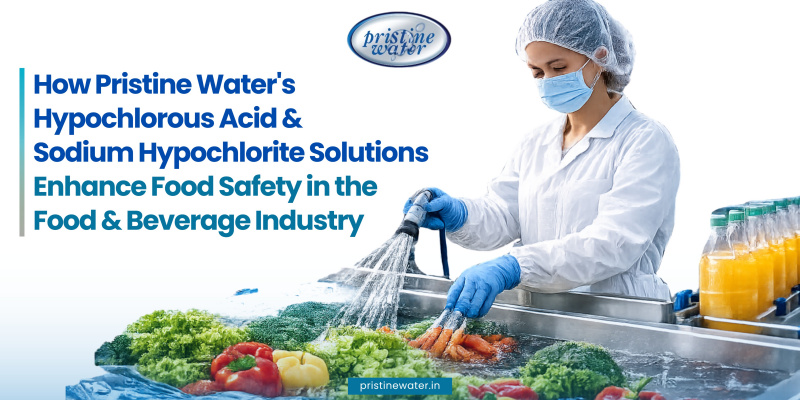
How Hypochlorous Acid and Sodium Hypochlorite Are Used in the Food & Beverage Industry
From bottled water and dairy products to fresh vegetables, seafood, soft drinks, packaged snacks, and ready-to-eat meals, every food product travels through a long production journey before reaching consumers. Along the way, it comes into contact with machinery, pipelines, conveyors, storage tanks, packaging equipment, water systems, and human operators. Each of these touchpoints presents an opportunity for harmful microorganisms to spread.
A single contaminated conveyor belt, an improperly sanitized storage tank, or even reused wash water can introduce pathogens that affect entire production batches. Beyond the health risks, contamination can result in costly recalls, regulatory penalties, production downtime, and long-term damage to a company’s reputation. This is why effective sanitation isn’t just another step in food processing, it’s the foundation of food safety.
Among the various disinfectants used worldwide, hypochlorous acid (HOCl) and sodium hypochlorite (NaOCl) have earned the trust of food manufacturers for decades. Together, they help eliminate harmful microorganisms, protect product quality, and maintain hygiene standards across processing facilities.
In this blog, we’ll explore how these chlorine-based disinfectants work, where they’re used throughout the food and beverage industry, why they’re so effective, and how modern electrochlorination systems are helping manufacturers produce these disinfectants safely and sustainably on-site.
Why Sanitization Is Non-Negotiable in Food Processing
Every year, millions of people around the world suffer from foodborne illnesses caused by bacteria, viruses, parasites, and fungi. Organisms such as Salmonella, Escherichia coli (E. coli), Listeria monocytogenes, and Campylobacter can contaminate food at almost any stage of production. Contamination may originate from:
- Raw agricultural products
- Process water
- contact surfaces
- Storage tanks
- Pipelines
- Packaging equipment
- Employee handling
- contamination during washing or processing
Modern food processing facilities therefore rely on comprehensive sanitation programs to ensure every surface, every pipeline, and every drop of processing water meets hygiene standards.
This is where chlorine-based disinfectants play a vital role.
Understanding the Science Behind Hypochlorous Acid and Sodium Hypochlorite
Although people often talk about hypochlorous acid and sodium hypochlorite separately, they’re actually closely connected.
When sodium hypochlorite is dissolved in water, it establishes an equilibrium that produces hypochlorous acid (HOCl) and hypochlorite ions (OCl⁻). The balance between these forms depends largely on the pH of the solution.
At a near-neutral pH (around 5.5–7.5), most of the available chlorine exists as hypochlorous acid, the most effective antimicrobial form. At higher pH levels, a greater proportion converts to the hypochlorite ion, which is still an effective disinfectant but acts more slowly.
Hypochlorous acid is particularly effective because it is electrically neutral, allowing it to penetrate microbial cell walls with ease. Once inside, it rapidly oxidizes essential proteins and enzymes, leading to the destruction of bacteria, viruses, fungi, and other pathogens.
This remarkable ability has made HOCl one of the most valuable sanitizing agents in food processing.
How Electrochlorination Supports Food Safety
Traditional facilities often purchase sodium hypochlorite in bulk, transport it to their sites, and store it until needed. While effective, this approach comes with challenges such as chemical degradation over time, transportation costs, storage risks, and handling precautions.
Modern electrochlorination systems offer an alternative. By using only salt, water, and electricity, these systems generate fresh sodium hypochlorite on-site. Once introduced into water at the appropriate conditions, the solution naturally forms hypochlorous acid, providing a highly effective disinfectant exactly where it’s needed.
For food and beverage manufacturers, this means:
- A continuous supply of fresh disinfectant
- dependence on chemical deliveries
- Lower storage and transportation risks
- worker safety
- More sustainable operations
Applications of Hypochlorous Acid and Sodium Hypochlorite in the Food & Beverage Industry
1. Fresh Fruit and Vegetable Washing
Fresh produce is exposed to soil, irrigation water, insects, transportation, and manual handling before it reaches processing facilities. Washing removes visible dirt, but it must also eliminate invisible microbial contaminants.
Processing plants use chlorine-based disinfectants in wash water to:
- Reduce bacterial contamination
- Prevent cross-contamination between produce
- Improve shelf life
- food safety standards
Research by the USDA Agricultural Research Service has demonstrated that maintaining appropriate free chlorine levels in produce wash water significantly reduces the transfer of harmful bacteria from contaminated produce to clean produce during commercial washing operations. Read more
2. Meat and Poultry Processing
During slaughtering, cutting, deboning, and packaging, meat products may come into contact with bacteria from equipment, water, or processing environments.
Hypochlorous acid and sodium hypochlorite are used to sanitize:
- Carcass washing systems
- Conveyor belts
- Cutting equipment
- Processing tables
- Knives
- Employee hygiene stations
3. Dairy Processing
Milk is an excellent growth medium for bacteria. Even small amounts of contamination inside storage tanks or pipelines can spoil entire batches of dairy products.
To maintain hygiene, dairy plants sanitize:
- Milk storage tanks
- Pasteurizers
- Stainless steel pipelines
- Filling machines
- Heat exchangers
- Packaging equipment
Hypochlorous acid works effectively at lower concentrations and leaves minimal residue when properly used, many dairy facilities incorporate it into their sanitation protocols.
4. Beverage Manufacturing
Whether producing bottled water, fruit juices, soft drinks, breweries, or dairy beverages, maintaining hygienic production environments is essential.
Disinfection is commonly performed on:
- Bottle rinsers
- Filling nozzles
- Syrup tanks
- Mixing vessels
- Water storage tanks
- Packaging lines
Continuous sanitation helps preserve product quality and extends shelf life.
5. Seafood Processing
Seafood processing involves high moisture environments where microorganisms can multiply rapidly.
Chlorine-based disinfectants are used for:
- Fish washing
- Ice production systems
- Processing equipment
- Storage containers
- Processing floors
Maintaining hygienic processing conditions improves both product safety and freshness.
6. Bakery and Ready-to-Eat Food Production
Unlike foods that undergo extensive cooking after packaging, ready-to-eat products rely heavily on sanitation during production.
Food processors sanitize:
- Conveyor belts
- Dough mixers
- Packaging equipment
- Preparation tables
- Storage bins
- Contact surfaces
Benefits of Using Hypochlorous Acid and Sodium Hypochlorite in Food Processing
Food manufacturers continue to rely on these disinfectants because they offer a combination of effectiveness, affordability, and operational flexibility.
1. Broad-Spectrum Antimicrobial Action
They are effective against bacteria, viruses, fungi, and many other microorganisms commonly encountered in food processing.
2. Rapid Disinfection
Hypochlorous acid, in particular, acts quickly by penetrating microbial cell walls and disrupting essential cellular functions.
3. Cost-Effective Sanitization
Chlorine-based disinfectants remain one of the most economical sanitation solutions for large-scale food production.
4. Improved Product Shelf Life
Reducing microbial contamination helps preserve product freshness and minimize spoilage.
5. Supports Regulatory Compliance
Proper sanitation helps facilities meet food safety requirements under systems such as HACCP, GMP, and FSMS.
6. Compatible with Automation
They integrate seamlessly into automated CIP systems and continuous production environments.
Why More Food Manufacturers Are Choosing On-Site Electrochlorination
The food industry is under constant pressure to improve safety while reducing costs and environmental impact.
On-site electrochlorination addresses all three. Instead of purchasing, transporting, and storing large volumes of concentrated sodium hypochlorite, manufacturers generate fresh disinfectant exactly where it’s needed.
The result is:
- Reduced chemical transportation
- Lower storage risks
- Consistent disinfectant quality
- Improved operational efficiency
- Reduced environmental footprint
- Greater sustainability
As food safety regulations become more stringent and sustainability gains importance, on-site generation is rapidly becoming the preferred approach for many facilities.
How Pristine Water Helps the Food & Beverage Industry
At Pristine Water, we understand that effective disinfection is more than simply adding chlorine. It’s about ensuring reliability, consistency, safety, and efficiency throughout the production process.
Our advanced Batch Electrochlorination Systems and Continuous Electrochlorination Systems generate fresh sodium hypochlorite on-site using only salt, water, and electricity. This provides food and beverage manufacturers with a dependable source of chlorine-based disinfectant while eliminating many of the challenges associated with transporting and storing concentrated chemicals.
Whether you’re operating a dairy plant, beverage manufacturing facility, seafood processing unit, meat processing line, bottled water plant, or fresh produce facility, our solutions are designed to support high hygiene standards while reducing operational costs and improving sustainability.
Looking to upgrade your food processing disinfection system?
Contact Pristine Water today to discover how our electrochlorination solutions can help you enhance food safety, simplify chemical management, and build a more sustainable operation.