

Cleaner Water, Lower Cancer Risk: What a 20-Year Study from Bangladesh Reveals
Access to safe drinking water is not just a matter of convenience — it’s a matter of life and death. A landmark 20-year study from Bangladesh now shows that switching from arsenic-contaminated wells to safe water sources dramatically reduces long-term risks of cancer and chronic disease. That’s a powerful wake-up call — and a strong endorsement for sustainable water-treatment solutions.
Bangladesh’s Arsenic Crisis
In many rural and under-served areas of Bangladesh — and in several other groundwater-dependent regions worldwide — people rely on shallow wells that tap aquifers with naturally high arsenic concentrations. Because arsenic in water is colorless, odorless, and tasteless, exposure often remains undetected for years.
Long-term ingestion of arsenic-contaminated water is linked to: skin, lung, bladder, and liver cancers; cardiovascular disease; stroke; diabetes; and a host of other chronic ailments.
Read more: Cancer Burden From Arsenic in Drinking Water in Bangladesh - PMC
In many areas, well arsenic levels exceed both international (World Health Organization) guidelines (10 µg/L) and local regulatory limits (for example, 50 µg/L). That puts entire communities at risk.
What the 20-Year Study (HEALS) Found
The study — known as the Health Effects of Arsenic Longitudinal Study (HEALS), conducted over 2000–2022 — followed nearly 11,000 adults in rural Bangladesh. Researchers tested over 10,000 wells for arsenic, and repeatedly measured individual exposure via urine samples.
This created a “natural experiment”:
-
Some households switched to safer wells after arsenic testing revealed contamination.
-
Others continued using high-arsenic water.
-
A third group had always relied on low-arsenic sources.
Over time, key findings emerged:
-
People who stayed on contaminated wells had significantly higher mortality from cancers and cardiovascular disease.
-
Those who switched to low-arsenic sources saw their mortality risk drop to levels comparable with those never heavily exposed.
-
In the region as a whole, well arsenic concentrations dropped by ≈ 70%, and urinary arsenic (a measure of internal exposure) dropped by ≈ 50% and remained low.
Importantly — even individuals who had consumed contaminated water for many years saw health improvements after switching. This demonstrates that it is never too late to reduce exposure and improve public health.
Read more: Twenty-year study shows cleaner water slashes cancer and heart disease deaths | ScienceDaily
The Takeaway: Cleaner Water Saves Lives
This study offers stark but hopeful evidence: replacing contaminated water sources with clean, low-arsenic alternatives isn’t just about disease prevention — it’s about saving lives, even for those already exposed.
For communities, governments, NGOs, and water utilities, the message is clear: invest in testing, remediation, and sustainable water-treatment solutions — and do so urgently.
Pristine Water’s Role in Ending Arsenic Exposure
The findings from HEALS are a clear call for water-treatment providers — and exactly the kind of challenge Pristine Water was founded to address.
Electrocoagulation & Arsenic Removal — A Proven, Practical Solution
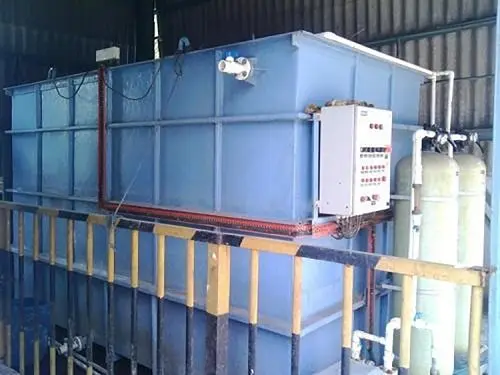
One of the most effective, low-cost, and field-ready methods for removing arsenic from groundwater is electrocoagulation (E-Coag) or electro-chemical arsenic remediation (ECAR). In simple terms: passing a low-voltage current through water with metal electrodes releases coagulants that bind arsenic, forming particles that can be filtered or settled out.
Advantages of E-Coag based removal:
- Effective for both major forms of arsenic (As(III) and As(V)).
- Low energy requirements — systems can run on grid, battery, or solar power.
- Minimal chemical supply, low maintenance, and sludge volume — making it suitable for rural or remote areas.
This aligns perfectly with what Pristine Water offers. In fact, Pristine Water — in collaboration with research institutions — has developed arsenic (and fluoride) removal systems using electrocoagulation, designed for community and household use.
Read more: Fluoride and Arsenic removal through Electro Coagulation | Pristine Water
Scalable Solutions
Because E-Coag systems are modular and adaptable, they can be deployed as Community-scale systems for villages or small towns (pooling demand, reducing per-household cost)
Pristine Water’s product portfolio also includes solar-powered E-Coag variants — a big advantage for off-grid or power-poor regions.
Conclusion
Clean water isn’t just a necessity — it’s a life-saving intervention. And with modern technologies like electrocoagulation, it becomes an achievable reality even in remote, underserved, or resource-constrained regions.
Pristine Water turns this possibility into measurable impact. With proven, and scalable electrochemical water treatment systems, we deliver solutions that are scientifically sound and operationally practical.
Ready to bring safe, arsenic-free water to your community?
Get in touch with Pristine Water today and take the first step toward sustainable clean-water solutions.